Difficulty: 2/5 – Beginner
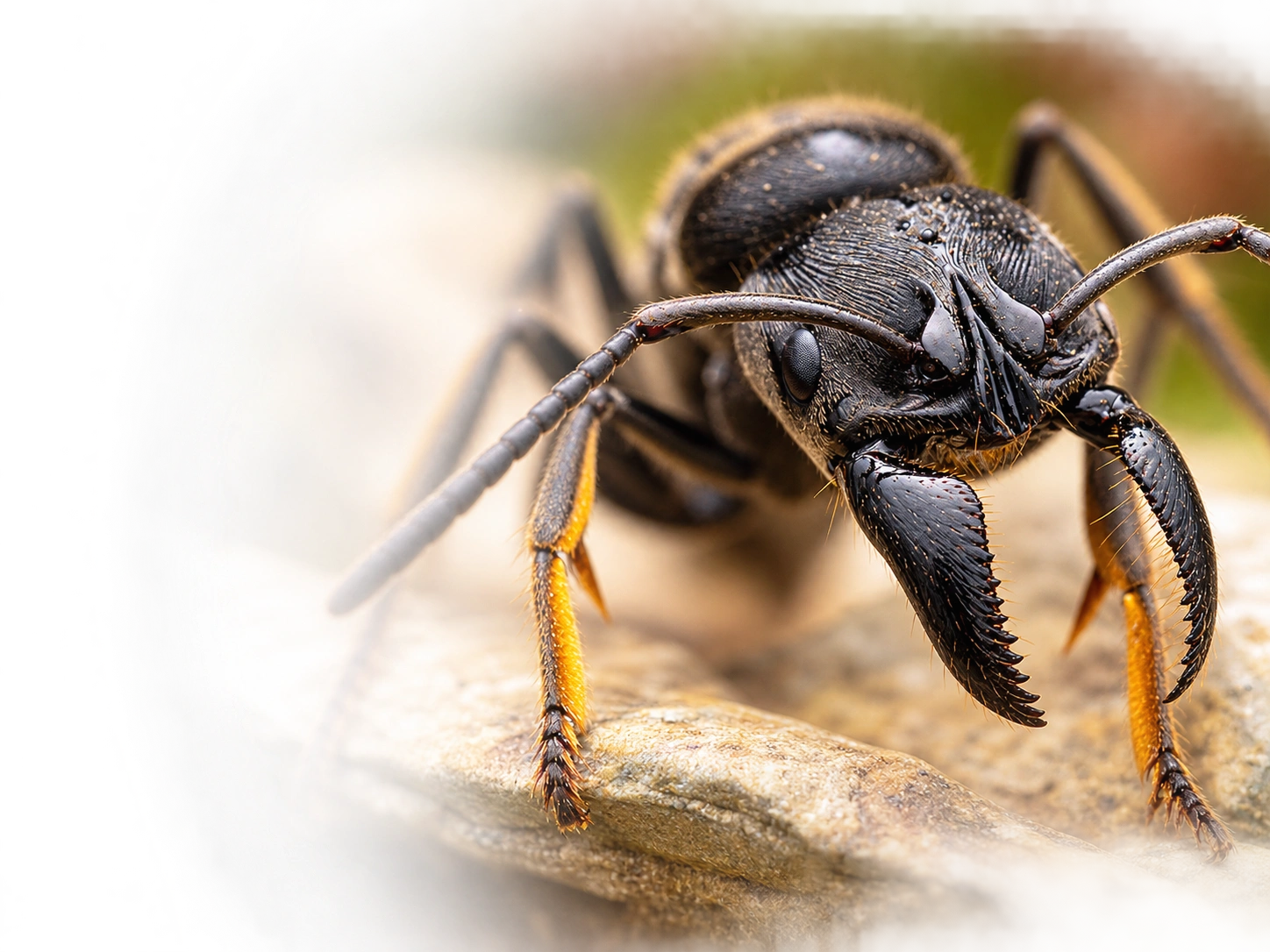
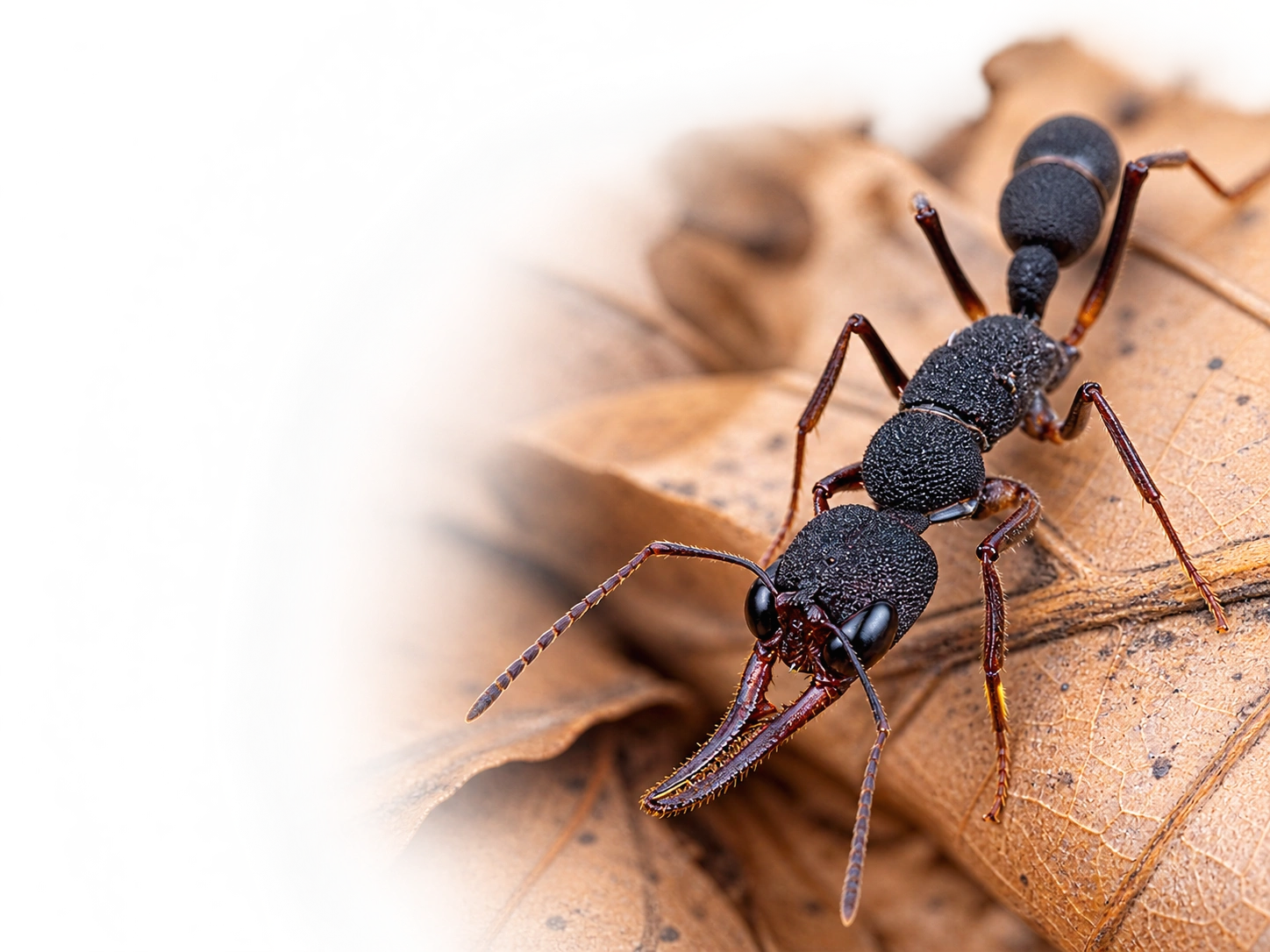
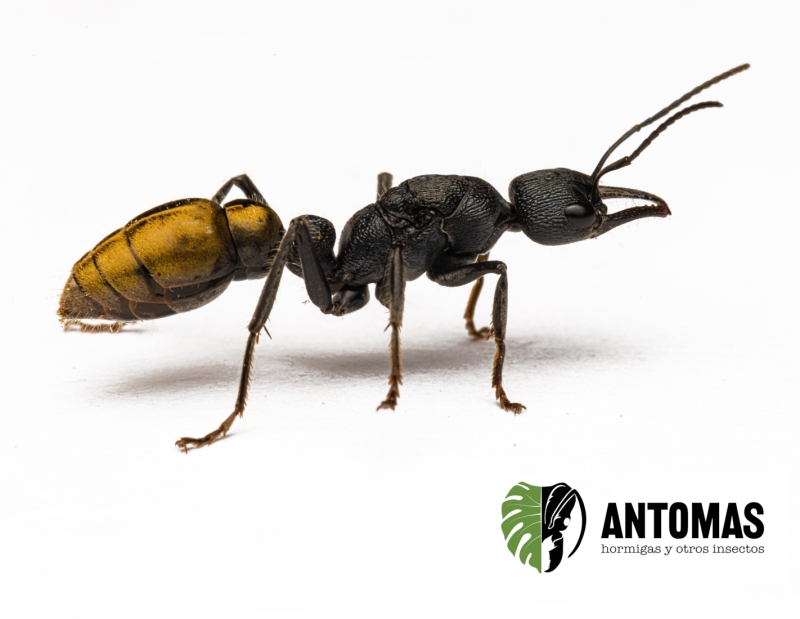
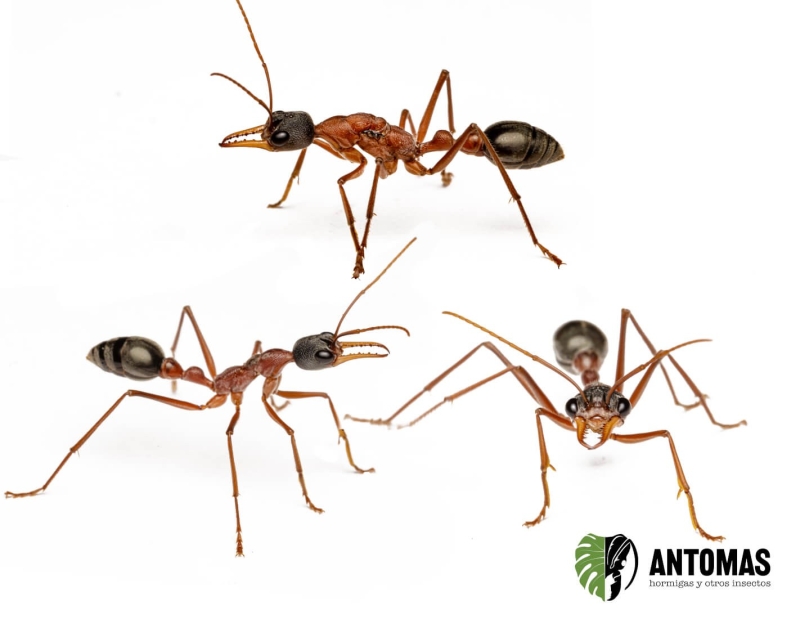
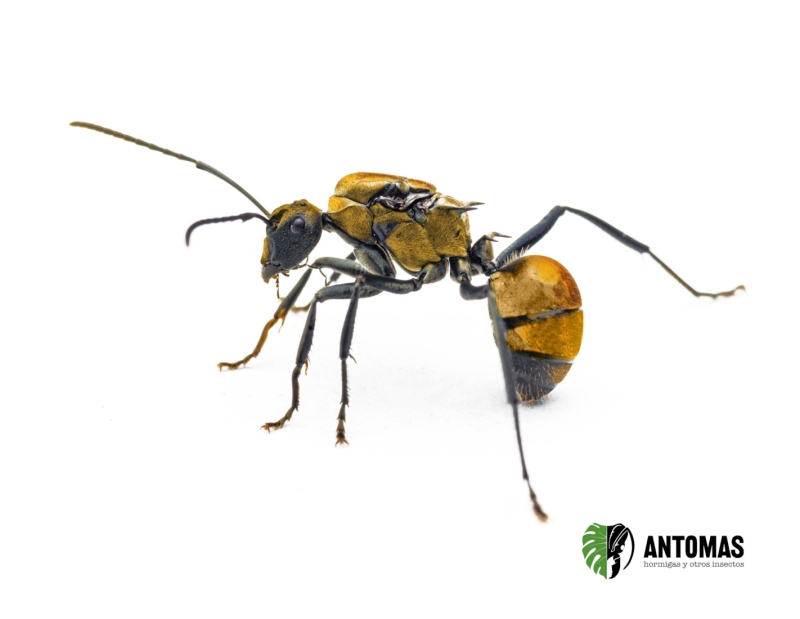
The funnel ant of eastern Australia, with extraordinarily long legs and antennae: a tireless digger, a gardener of seeds and one of the commonest Aphaenogaster on its continent. In our shop it is listed as ‘Aphaenogaster longipes’, but its valid scientific name is Aphaenogaster longiceps. Queens with brood, claustral founding. Plaster nest with moderate humidity (Qbik Wild), 22–26 °C, sugar always available and plenty of varied protein. Mild diapause of about 3 months at 10–15 °C during our winter. They dig and bury everything: water always in a tube and well away from the sand. Paraffin oil barrier.
Aphaenogaster longiceps (F. Smith, 1858) is the funnel ant, what Australians call a funnel ant: a slender ant with very long legs and antennae that lives underground across much of eastern Australia and gives itself away with funnel-shaped entrances dug into the sand. It is one of the most frequent Aphaenogaster species on the continent and, almost unseen, one of the great workers of Australian soil: it turns it over, aerates it and buries the seeds of hundreds of plants.
In our shop it appears as ‘Aphaenogaster longipes’, the name it came to us under. It is the same ant, and here we explain where the confusion comes from. We separate what is documented for A. longiceps, what is known about its genus and what keepers have learnt in practice. The practical conclusion is simple: it is a rewarding species, suitable for beginners, as long as you understand that it is, above all, a digger.
Biology
Longipes or longiceps? A mistake with almost a century of history
The two names are so alike that they get mixed up without anyone meaning to, but they do not mean the same thing. Longipes means ‘long legs’; longiceps, ‘long head’, from the Latin longus and caput. The valid name of this funnel ant is Aphaenogaster longiceps: Frederick Smith described it in 1858 as Myrmica longiceps, from a worker collected in Melbourne, and in 1876 Gustav Mayr moved it to Aphaenogaster. And A. longipes? It does exist in the catalogues, but it is an old combination for an ant from Singapore and Borneo that is now placed in Pheidole. Nothing to do with Australia.
The curious thing is that the confusion is nothing new. In his revision of the Australian Aphaenogaster, Steve Shattuck compiled the literature on the species and, among the works cited, there is one from 1927 on its habits written ‘as A. longipes (sic)’. The misspelling has been doing the rounds for almost a hundred years, and it makes sense: the first thing that strikes you about this ant is its extraordinarily long legs and antennae. Other old names, such as ruginota Forel, 1902, or the variety flava Emery, 1921, are now synonyms.
Aphaenogaster is a genus of myrmicines found across almost the whole world, from the Mediterranean to North America, Asia and Australia, and belongs to the tribe Stenammini according to the large 2015 molecular phylogeny of the myrmicines. Australia has few species, and A. longiceps is the one found most often; its closest relatives there are A. pythia, from northern Queensland, and A. barbigula, from the semi-arid inland.
From coastal heath to eucalypt woodland
Shattuck examined specimens from the Australian Capital Territory, from New South Wales, where it is very abundant, from Queensland, from the south-east to the central east, from Victoria and from one site in south-eastern South Australia. What is surprising is the range of habitats: from swampy coastal heath, wet sclerophyll forest and rainforest to dry sclerophyll forest and Australian cypress-pine woodland (Callitris). In northern Queensland, a study from the 1960s found its relative A. pythia in wet forest and A. longiceps in the lower-rainfall areas of dry forest and eucalypt woodland.
What it does need is good soil to dig in: naturalists describe a clear preference for well-drained sandy soils. That is exactly what you will see at home: an ant that, if you give it soil, moves it non-stop.
Funnels in the sand: the species’ signature
It owes the label ‘funnel ant’ to its nest entrance. In sandy soils, A. longiceps nests are very conspicuous, with large funnel-shaped entrances; in firmer soils they go almost unnoticed, with just a low little mound of loose soil around the hole. They also sometimes nest under stones or other objects on the ground. According to the Australian Museum, these funnels can reach about 4 cm in diameter and 30 cm in depth.
In the genus, it has been suggested that the funnel of loose sand also works as a small trap for arthropods. What is well described is what happens on the surface: very little. According to Shattuck, next to the nest you see a few workers carrying out soil or guarding the entrance, and the foragers leave alone and do not go far. Almost the whole life of the colony takes place underground. Even so, their dense nests can make the turf of gardens and golf courses subside, and in the pastures of Queensland their large funnels were considered a danger to livestock.
Soil engineers: more earth than the meat ant
Australia has ants that build spectacular mounds, such as the meat ant, Iridomyrmex purpureus, whose nests can last up to a century. But in 1985 a team of soil scientists who studied those mounds in New South Wales came to a surprising conclusion: despite their size, neither the meat ant nor Camponotus intrepidus mixes as much soil as the small and far more common A. longiceps.
The key lies in the method. Australian Aphaenogaster dig dense galleries in the topsoil and move them often, leaving at each entrance an ephemeral mound that the rain soon washes away. A 2009 review of their role as ‘bioturbators’, animals that rework the soil, concluded that the amount of soil they bring to the surface is among the largest measured for ants anywhere in the world. On burnt hillslopes in south-eastern Australia, another study measured about 246 g of soil per square metre per year in ant mounds alone, as much as was moved by burrowing vertebrates. And for its relative A. barbigula, it was calculated that all the topsoil passes through the nests in about 200 years.
Gardeners of the forest: seeds with a reward
Australia is the paradise of myrmecochory, seed dispersal by ants. A classic 1975 study estimated that some 1,500 Australian plant species, mainly shrubs of dry heath and sclerophyll forest, produce seeds with an elaiosome, a fat-rich appendage that serves as a reward for the ants, an alliance that has arisen many times independently in flowering plants. In a 1992 study near Sydney, researchers followed the fate of these seeds:
- The ants carried them to their nests, over an average distance of 1.1 m (from 6 cm to 11 m).
- A. longiceps and its neighbour Rhytidoponera ‘metallica’ ate the elaiosome and took most of the seeds back out intact to the surface, but left some buried in the nest, less than 12 cm deep.
- Seeds collected by them were more likely to survive than those collected by a Pheidole, which ate many of them.
- And, after a fire, the greatest seedling emergence came from A. longiceps nests.
So the funnel ant is not a grain harvester like Messor, but a gardener that is paid in fat and leaves the seed. If you enjoy stories like these, we also have the metallic pony ant, Rhytidoponera metallica.
Surviving fire underground
Australian sclerophyll forest burns often, and an ant that lives buried has an advantage. A naturalist who follows A. longiceps in a sandy forest documented it after a high-intensity fire: within a week the pale circles of new mounds appeared on the ash, and after a month there were active workers at the entrances. By bringing up clean soil from below, they were burying the ash and charcoal. It is a field observation, not a study, but it fits with the above: deep, resilient colonies.
Queens with an escort: the nuptial flight
There is no published study of its nuptial flight, but the same naturalist photographed one in mid-October, in the middle of the austral spring. At around five in the afternoon, the workers were coming out of the funnel escorting the winged queens: they touched them with their antennae and legs and guided them away from the entrance. A queen that got stuck on the sticky leaves of a sundew, a carnivorous plant, was freed by her workers. By around six, some queens were already tearing off their wings to look for a place to found. She then buries herself and founds claustrally, like most Aphaenogaster.
A temperate climate… upside down compared with ours
The climate of its range goes from temperate in the south, in Victoria and on the New South Wales tablelands, with cool winters and frosts inland, to humid subtropical in south-eastern Queensland, with mild winters. For keeping, two ideas: it does not need tropical heat and it appreciates a mild winter rest; and its seasons run the opposite way to ours, so a newly arrived queen may still be on southern-hemisphere time (see ‘Diapause’).
Size and morphology
A slender, agile myrmicine ant with monomorphic workers (all the same shape, with small differences in size), a sting and very elongated proportions. What strikes you most when you see it is the same thing that misled those who called it ‘longipes’: the legs and the antennae.
- Antennae. 12-segmented, with a 4-segmented club. The scape is extremely long: between 1.3 and 1.6 times the width of the head. It is one of the two features that, according to Shattuck, separate it from its relatives.
- Thorax. Long and narrow. The short erect hairs on the dorsum, especially on the mesonotum, have blunt tips: the second diagnostic feature.
- Head. Longer than wide, as its name indicates, with the posterior margin broadly arched. Underneath, hairs scattered at random, not forming a psammophore, the ‘basket’ of hairs of some desert ants.
- Propodeal spines. Long, at the rear of the thorax.
- Waist. Two nodes, petiole and postpetiole, as in all myrmicines.
- Legs. Very long: the hind tibia is almost as long as the head.
- Brood. Naked pupae, without a cocoon, as in other myrmicines.
Colouration. Shattuck’s revision does not describe the colour of the workers, so, to recognise it, what counts are the long scapes and the blunt hairs on the thorax. The queen is clearly larger and more robust than the workers.
Approximate measurements
- Workers, head length: 0.99–1.43 mm
- Workers, head width: 0.82–1.25 mm (cephalic index 78–89: the head is between 12 and 28% longer than wide)
- Workers, scape length: 1.31–1.71 mm (scape index 130–161)
- Workers, mesosoma length: 1.50–2.07 mm
- Workers, hind tibia length: 1.04–1.41 mm
- Workers, eye length: 0.18–0.25 mm
- Total length of workers and queen: not published
The measurements come from ten workers measured by Shattuck (2008). There is no published measurement of the total length of the workers, nor of the queen or the male, so we do not give one: we prefer not to repeat the figures that circulate in shops.
Keeping in captivity
Difficulty: 2/5 – Beginner
At Antomas we consider it a species suitable for beginners: it eats everything, does not need tropical heat, its diapause is mild and, in the Australian hobby, it is described as a calm, not very aggressive ant. With plenty of protein and sugar, colonies grow at a good pace. It is not a 1/5 for two reasons: it is a born digger that buries its food and, if it can, its water (see ‘Diggers: keep the water safe from the sand’), and it arrives with the reversed seasons of the southern hemisphere (see ‘Diapause’). And it is well worth it: an elegant ant, with fascinating natural history and very rarely seen in European setups.
Recommended parameters
- Nest temperature: 22–26 °C in the active season. It is an ant of temperate to subtropical climates: it needs no more.
- Foraging area: room temperature, with a slightly warmer end if you like, up to about 28 °C, so they can choose.
- Humidity: moderate in the nest, with a gradient: one wetter area and one drier. The foraging area, dry.
- Water: always available, in a test tube with water and cotton wool in the foraging area.
- Light: the nest dark and the foraging area lit, with a normal day–night cycle.
- Diapause: mild, about 3 months at 10–15 °C during our winter (see ‘Diapause’).
Avoid direct sunlight and radiators. If you use heating, keep it gentle, on one side of the nest and with a thermostat.
Recommended formicaria
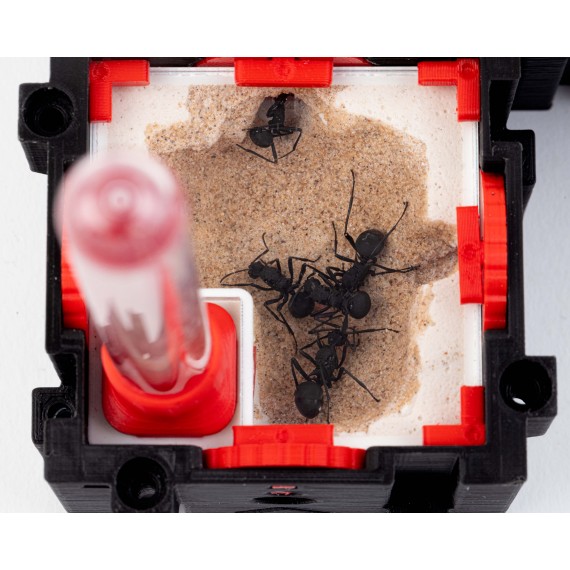
In the wild, A. longiceps lives underground, in galleries that go down in search of moisture in the subsoil. That is why at Antomas we recommend the Qbik Wild range by Anthouse: plaster formicaria, which hold moisture well and let you keep a wetter area and a drier one inside the nest. For a queen with brood, start with the Qbik Wild One P 1C, small and easy to keep an eye on:
When the colony grows, expand with the Qbik Wild Duo P 2C, which gives it more chambers and a wider humidity gradient:
Expand when you see the brood piled up in every chamber, not before: in a huge nest for a small colony, the spare chambers end up as rubbish dumps. Complete the setup like this:
- Humidity with a gradient: moisten the plaster at the part furthest from the entrance and leave the nearby chambers dry. They will choose where to put the brood.
- A dry foraging area, with a thin layer of sand or soil if you want to watch them dig, flat stones and a piece or two of bark.
- Water always available, in a test tube with water and cotton wool, safe from the sand (see the next section).
- A feeder for sugary liquids, never on cotton wool (see ‘Feeding’).
- An escape barrier on the upper part of the foraging area walls and a tight-fitting lid (see ‘Escapes and barriers’).
Diggers: keep the water safe from the sand
This is the most important advice in this care sheet, and the keepers themselves taught it to us. On a keeping forum, an Australian hobbyist explained that his workers kept filling the water feeder with sand over and over: the sand acted as a wick, the water leaked out and soaked the substrate. When he gave them a clayey, sandy soil, they quickly built several funnel entrances and the colony grew fast. The lesson:
- Water in a test tube with cotton wool, never in open water dishes or in small saucers with sand around them.
- If you put sand in the foraging area, use only a little and do not let it reach the mouth of the water tube or the feeder. Place them on a flat stone or in a corner with no substrate.
- Check often that they have not blocked the cotton wool or the mouth of the feeder. If they have, clean it or replace it.
- Enjoy it: watching them build their funnels is one of the great spectacles of this species.
Founding: queen with brood, step by step
At Antomas we sell queens with brood: fertilised queens that have already started their colony in a test tube, with eggs, larvae or pupae. The founding of A. longiceps is claustral: the queen raises her first workers without going out to feed, thanks to her fat reserves and the flight muscles she no longer needs.
- Tube and darkness. Keep the tube just as it arrives, with its water reservoir behind the cotton wool, in a dark place free from vibrations, at 24–26 °C. You can cover it with a cloth or a piece of card.
- Humidity in the tube. Check from time to time that the cotton wool is still damp and that there is water left in the reservoir. If the water runs out or the tube gets very dirty, move her to a new tube by tipping, carefully.
- Check often, gently. Take a look every few days, in soft light and without moving the tube, to spot a dry tube, mould or brood that is not progressing in time. What stresses the queen is shaking and unnecessary tube changes, not you looking at her.
- Food. Although the founding is claustral, at Antomas we recommend offering a tiny drop of sugary liquid from time to time on a small piece of aluminium foil, never on the tube’s cotton wool, and a small piece of insect. Remove the leftovers the next day. Once there are workers, offer protein two or three times a week.
- The first workers. The first workers, known as nanitics, are somewhat smaller than the ones that follow. In one keeper’s journal, a queen with about 9 nanitics at the end of January had, less than two months later, at least 22 workers and a dozen larvae. It is normal for the queen to lay in bursts at first.
When should you move her into the nest? When she has about 5–10 workers, always into a nest suited to her size, such as the Qbik Wild One P 1C, and sooner if the tube becomes too small, dirty or runs out of water. We move them by tipping (see ‘Arrival and moving’).
Arrival and moving
When you receive your queen, let her rest in a dark place at 24–26 °C and check that the tube has water; do not move her into the nest as soon as she arrives. When the time comes, at Antomas we do it by tipping: with the formicarium already set up, the barrier in place and the water where it belongs, we open the tube in the foraging area, next to the nest entrance, and gently tip out the queen, the workers and the brood, helping any stragglers with a paintbrush. Work over a tray and keep the nest dark: the workers soon carry the brood inside. For any later change of formicarium, use the same method.
Feeding
Protein: the more, the better. It is the engine of their growth, and it is the Antomas philosophy: if you do daily maintenance and remove leftovers, it is better to overfeed, because the colony understands that it has more resources and grows faster and larger. If you will not be able to clean often, it is better not to overfeed: leftover food rots and brings mould and mites. Change the type of insect from one week to the next, so they do not always eat the same thing:
Keepers say they love earwigs and woodlice. Buy your insects from a reliable supplier: insects treated with insecticides can kill the colony.
Sugary liquids, always available. In the wild, the genus lives largely on honeydew from the aphids and scale insects it tends on roots, and in captivity they throw themselves at nectar. Vary the sugars: at Antomas we recommend Blue Sugar nectar by Anthouse 4–5 times a week and another sugary liquid or nectar 1–2 times a week. You can also add a little protein to the nectar. Always offer them in a feeder and never on cotton wool, because cotton wool goes mouldy and spoils the liquid very quickly. Use a traditional or home-made feeder, where the drop stays ‘spread out’ and accessible, away from the sand, and replace it before it ferments.
What about seeds? It is not a harvester: it collects seeds for their elaiosome and then throws them out. You can occasionally offer a few small seeds as a supplement, removing within a few days any they do not touch, but the basis of its diet is insects and sugar.
Water: always, in the test tube with cotton wool in the foraging area, and safe from the sand.
Diapause
It is an ant of temperate to subtropical climates, with cool winters over much of its range. That is why at Antomas we recommend a mild diapause of about 3 months (10–12 weeks) at 10–15 °C, roughly from December to February.
- Lower the temperature gradually, over one or two weeks, and raise it the same way at the end.
- During diapause: water always available, a little sugary liquid and little or no protein. Activity drops a lot, but keep checking the colony often: the water in the tube, the humidity of the nest and that no mould appears.
- At the end, go back to protein as soon as you see activity and brood.
The first winter, with flexibility. If you receive the queen in autumn, you can keep her active that first winter or give her a short, mild rest. If she slows down laying in the middle of the European summer, do not lower the temperature: it is her austral clock. From the following year, normal diapause during our winter.
Behaviour in captivity
Discreet and hard-working. Just as in the wild, much of the colony spends its time inside the nest, and the foragers go out alone, without big columns.
Engineers, and tidy ones. If you give them sand or soil, they will move it non-stop, make little heaps next to the entrances and bury the leftovers. Keepers also report that they pile food leftovers against one wall of the foraging area, which makes cleaning easier.
Watch without fear. At Antomas we believe ants are there to be enjoyed, observed and learnt from, not kept hidden away. Just leave them the dark area in the nest and the lit foraging area, and observe them gently. And look at them often: it is the best way to spot any problem in time.
Warning signs:
- Brood that stalls or disappears outside the first summer: it is almost always a lack of protein.
- Sand inside the feeder or the water tube, or a soaked substrate: time to reorganise the foraging area.
- Condensation on the walls or mould: too much humidity or forgotten leftovers.
- A founding queen eating her eggs: too much shaking or a tube in poor condition.
Escapes and barriers
They are agile, long-legged ants, and you should take them seriously from the first workers:
- A band of paraffin oil or liquid paraffin on the upper part of the foraging area walls, thin and continuous. Renew it when it collects dust or sand. If they ever get past it, PTFE (Fluon) is the alternative.
- A tight-fitting lid, as a second line of defence.
- No gaps: check the connections, stoppers and tubes.
- Nothing that can act as a bridge: no twigs or stones leaning near the barrier, and watch out for the heaps of sand they themselves pile up against the walls.
Handling and safety
Like all myrmicines, they have a sting, but they are not aggressive: in Australia they are described as ants that may sting if disturbed, with no further consequences. Always handle them with entomological tools, a soft paintbrush or soft forceps, never with your hands. Do not combine different queens or colonies, or keep them with other species. It is an exotic species: it must never be released.
What not to do
- Put water in open dishes or let the sand reach the tubes and feeders.
- Put sugary liquids on cotton wool or let them run out.
- Always give them the same insect, leave leftovers uncleaned or feed them only seeds.
- Wet the whole nest: humidity with a gradient, never waterlogged.
- Move the queen into a nest that is too big for her size.
- Cool her down in the middle of the European summer because the queen slows her laying in the first year.
- Give her a cold diapause, like a northern European ant: 10–15 °C is enough.
- Leave gaps, ill-fitting lids or the barrier unrenewed.
- Combine different queens or colonies, or handle them with your hands.
Scientific sources
This care sheet has been compiled from the scientific literature on Aphaenogaster longiceps and its genus, taxonomic catalogues, observations by naturalists and the Australian Museum, keeping journals published on forums and Antomas’ own experience. Main references:
- Shattuck, S. O. (2008). Australian ants of the genus Aphaenogaster (Hymenoptera: Formicidae). Zootaxa 1677: 25–45. doi:10.11646/zootaxa.1677.1.2
- Ward, P. S., Brady, S. G., Fisher, B. L. & Schultz, T. R. (2015). The evolution of myrmicine ants: phylogeny and biogeography of a hyperdiverse ant clade (Hymenoptera: Formicidae). Systematic Entomology 40: 61–81. doi:10.1111/syen.12090
- Saunders, G. W. (1967). Funnel ants (Aphaenogaster spp., Formicidae) as pasture pests in North Queensland. I. Ecological background, status and distribution. Bulletin of Entomological Research 57: 419–432. doi:10.1017/S000748530005015X
- Cowan, J. A., Humphreys, G. S., Mitchell, P. B. & Murphy, C. L. (1985). An assessment of pedoturbation by two species of mound-building ants, Camponotus intrepidus (Kirby) and Iridomyrmex purpureus (F. Smith). Australian Journal of Soil Research 23: 95–107. doi:10.1071/SR9850095
- Richards, P. J. (2009). Aphaenogaster ants as bioturbators: impacts on soil and slope processes. Earth-Science Reviews 96: 92–106. doi:10.1016/j.earscirev.2009.06.004
- Richards, P. J., Humphreys, G. S., Tomkins, K. M., Shakesby, R. A. & Doerr, S. H. (2011). Bioturbation on wildfire-affected southeast Australian hillslopes: spatial and temporal variation. Catena 87: 20–30. doi:10.1016/j.catena.2011.05.003
- Eldridge, D. J. & Pickard, J. (1994). Effects of ants on sandy soils in semi-arid eastern Australia. II. Relocation of nest entrances and consequences for bioturbation. Australian Journal of Soil Research 32: 323–333. doi:10.1071/SR9940323
- Berg, R. Y. (1975). Myrmecochorous plants in Australia and their dispersal by ants. Australian Journal of Botany 23: 475–508. doi:10.1071/BT9750475
- Hughes, L. & Westoby, M. (1992). Fate of seeds adapted for dispersal by ants in Australian sclerophyll vegetation. Ecology 73: 1285–1299. doi:10.2307/1940676
- Lengyel, S., Gove, A. D., Latimer, A. M., Majer, J. D. & Dunn, R. R. (2010). Convergent evolution of seed dispersal by ants, and phylogeny and biogeography in flowering plants: a global survey. Perspectives in Plant Ecology, Evolution and Systematics 12: 43–55. doi:10.1016/j.ppees.2009.08.001