This website uses its own and third-party cookies to improve our services and show you advertising related to your preferences by analyzing your browsing habits. To give your consent to its use, press the Accept button.
Cookie preferences
| Cookie | Provider | Purpose | Expiry |
|---|---|---|---|
| PHP_SESSID | antomas.es | The PHPSESSID cookie is native to PHP and allows websites to store serialised status data. On the website it is used to establish a user session and to pass state data through a temporary cookie, which is commonly known as a session cookie. These Cookies will only remain on your computer until you close your browser. | Session |
| PrestaShop-# | antomas.es | This is a cookie used by Prestashop to store information and keep the user's session open. It stores information such as currency, language, customer ID, among other data necessary for the proper functioning of the shop. | 480 hours |
| rc::a | It is used to read and filter bot requests. | Persistent | |
| rc::c | It is used to read and filter bot requests. | Persistent |
| Cookie | Provider | Purpose | Expiry |
|---|---|---|---|
| _ga | Registers a unique ID that is used to generate statistical data on how the visitor uses the website. | 2 years | |
| _gat | Used by Google Analytics to throttle request rate | 1 day | |
| _gat_gtag_UA_# | Used to throttle request rate. | 1 minute | |
| _gd# | This is a Google Analytics Session cookie used to generate statistical data on how you use the website which is removed when you quit your browser. | Session | |
| _gid | Registers a unique ID that is used to generate statistical data on how the visitor uses the website. | 1 day |
Acanthomyrmex sp. – Big-headed Ant
Biology
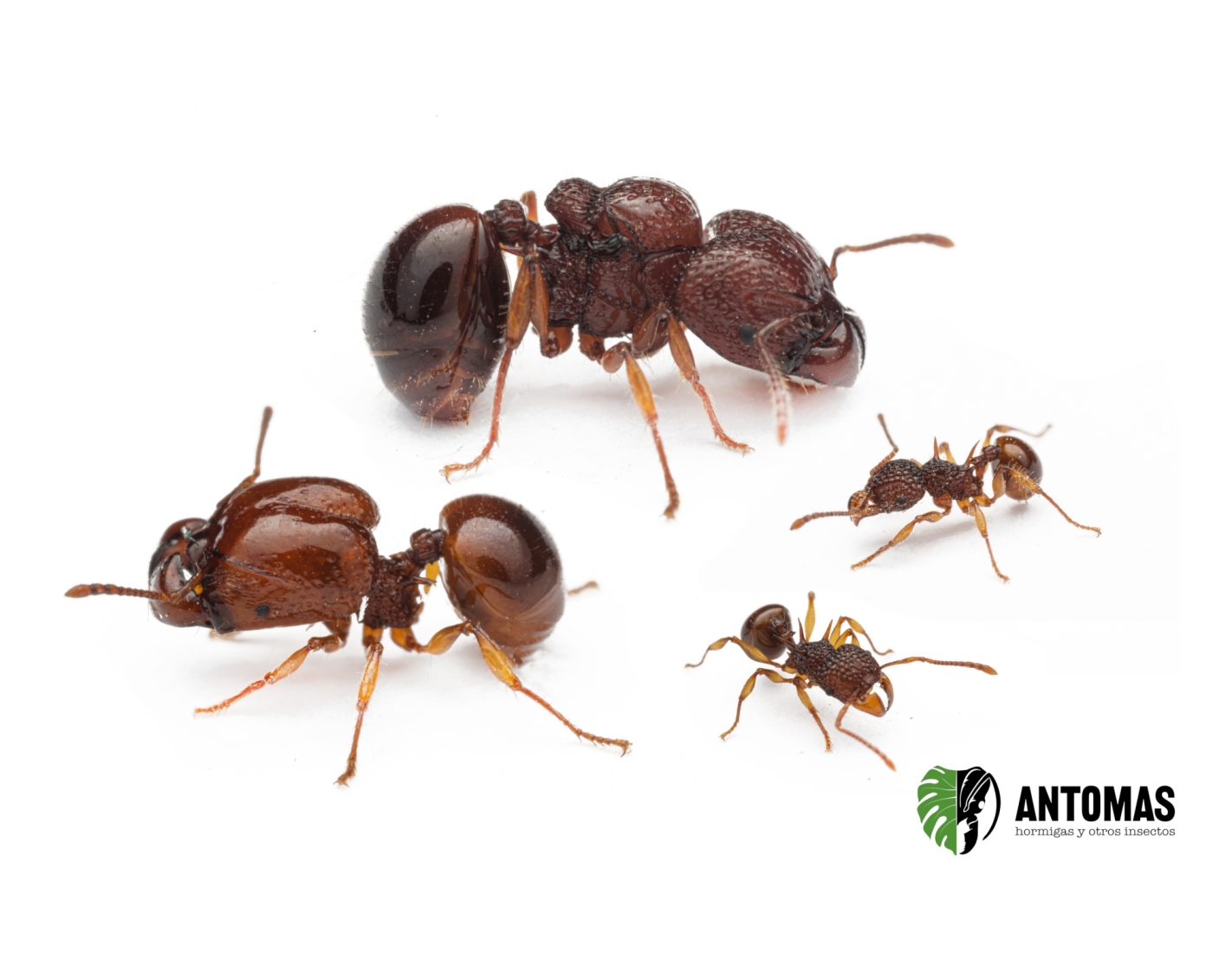
Acanthomyrmex is a genus of Asian ants distributed mainly throughout the tropical regions of Southeast Asia, where it inhabits humid forests with abundant organic matter, decaying wood, and constantly moist soils. These ants are small but highly specialized, best known for their disproportionate major or soldier castes, with enormous heads adapted for handling and processing seeds.
They are mainly granivorous and opportunistic ants, although they supplement their diet with small insects, sugary liquids, and various organic matter. Many species store seeds inside the nest, a relatively uncommon behavior among tropical rainforest ants.
One of the most curious traits of this genus is its possible indirect relationship with certain stick insects. Some phasmid species have been observed laying their eggs near Acanthomyrmex foraging trails. Workers probably mistake these eggs for seeds because of surface structures similar to elaiosomes, carrying them into the nest, where they remain protected until hatching.
These ants are relatively calm and not very aggressive, although they are extremely sensitive to sudden changes in humidity. Colonies usually remain hidden and show discreet activity, focused mainly inside the nest and on food transport.
Colonies do not usually reach extremely large sizes, generally remaining at a few hundred to several thousand individuals depending on the species and environmental conditions.
Size and Morphology
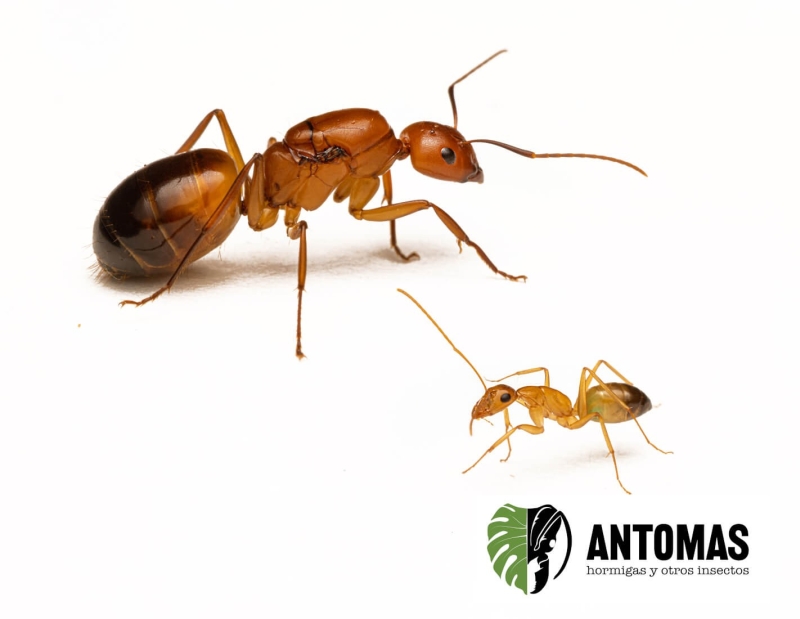
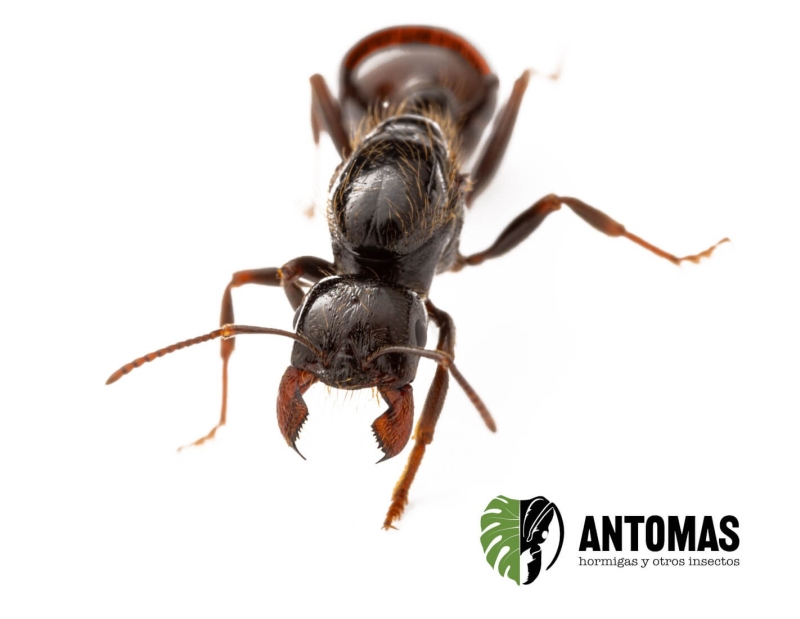
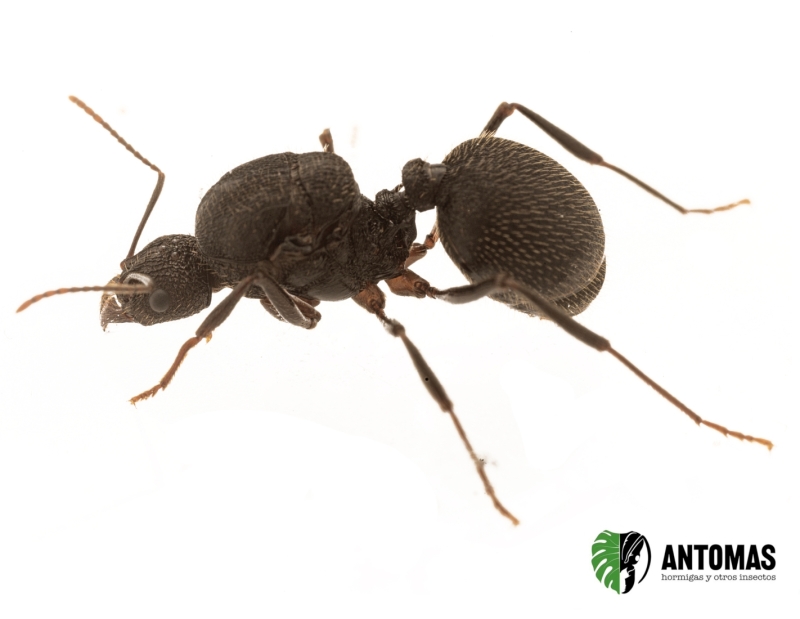
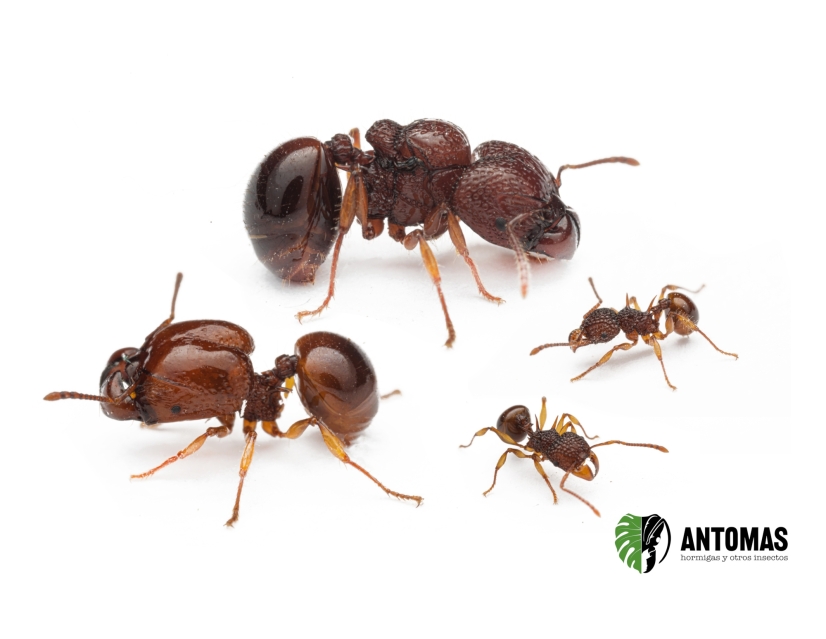
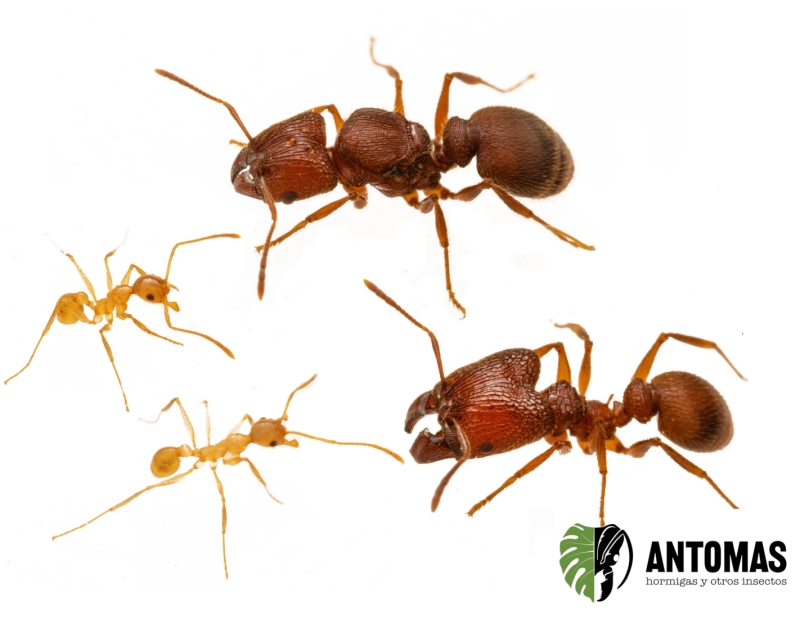
Acanthomyrmex displays marked polymorphism. Minor workers are small and relatively slender, whereas soldiers possess gigantic heads in proportion to their bodies, giving rise to their common name of “Big-headed Ant”.
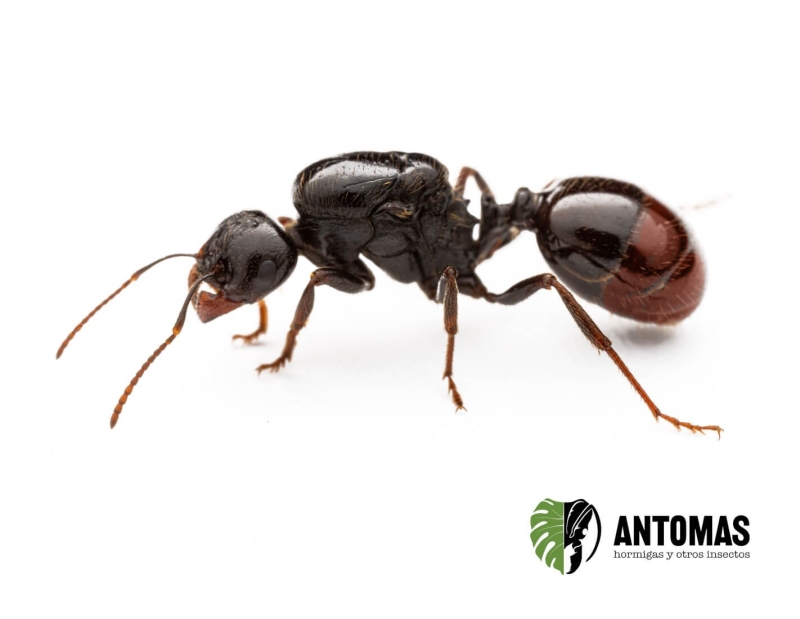
Coloration usually varies between brown and reddish tones. The body is compact and adapted to humid leaf-litter and decaying wood environments.
Majors possess strong mandibles designed mainly for cracking and handling hard seeds. Despite their robust appearance, they are not particularly aggressive ants.
Approximate measurements:
- Minor workers: 3 – 5 mm
- Major workers: 5 – 8 mm
- Queen: 7 – 10 mm
Captive Care
Acanthomyrmex is a hardy genus, although successfully growing colonies can be challenging in captivity.
Recommended parameters:
- Temperature: 22–26 °C
- Humidity: 75–90 %
- Nests: natural materials or very small nests with constant humidity.
The nest should be kept constantly humid while avoiding waterlogging. These ants tolerate desiccation poorly.
In addition, the nest should be adapted to their size. In general, a single small formicarium will be sufficient for the entire lifespan of the colony, making this species very practical in terms of space requirements.
The diet should be structured around:
- Carbohydrates: nectars and sugary liquids.
- Proteins: small insects and a wide variety of seeds.
As a particularly useful tip for captive care, many species readily accept fig seeds, showing great interest in them and actively storing them inside the nest.
It is recommended to offer a wide variety of small seeds, as some colonies may show very marked preferences depending on the species.
They do not usually display escape-prone behavior, although they can climb smooth surfaces.
These ants are completely harmless; nevertheless, if handling is necessary, it is recommended to use clean entomological tweezers.